



2026-04-20
Last night, CCTV-2 spotlighted a key technology behind the rise of humanoid robots
 CCTV Finance
The robotics industry is entering a new phase of large-scale production competition

Leading players are racing to deliver complete robot systems, while joint module suppliers focus on scaling up production capacity.Deeper in the sensing layer, encoders—often described as the “nerve endings” of robotic joints—are rapidly becoming one of the most constrained components in the supply chain.On April 19, CCTV-2’s Economic Information Broadcast highlighted this fast-growing industrial chain, featuring KingKong Technology as a fast-rising yet low-profile player in the robotic encoder space.
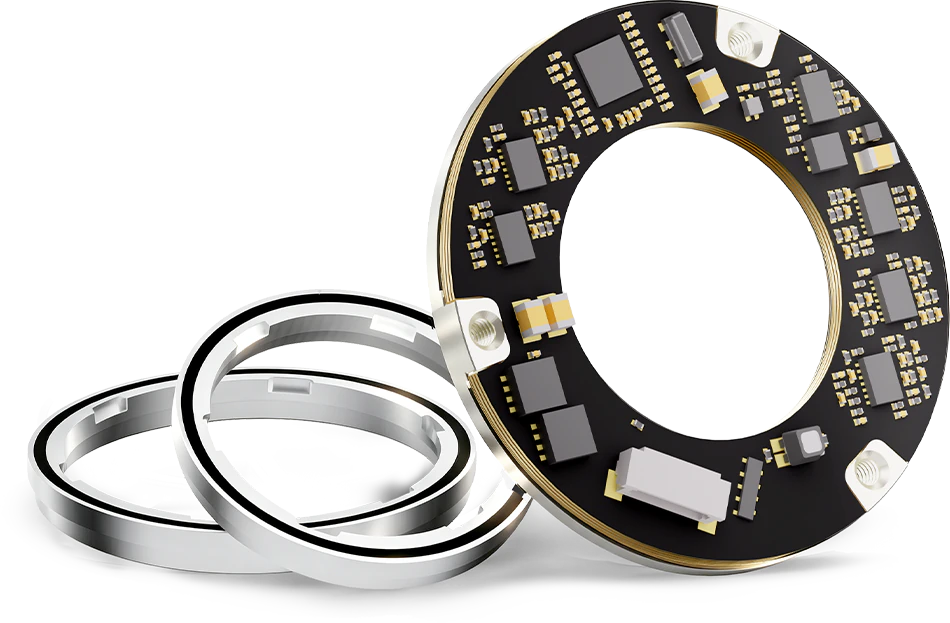
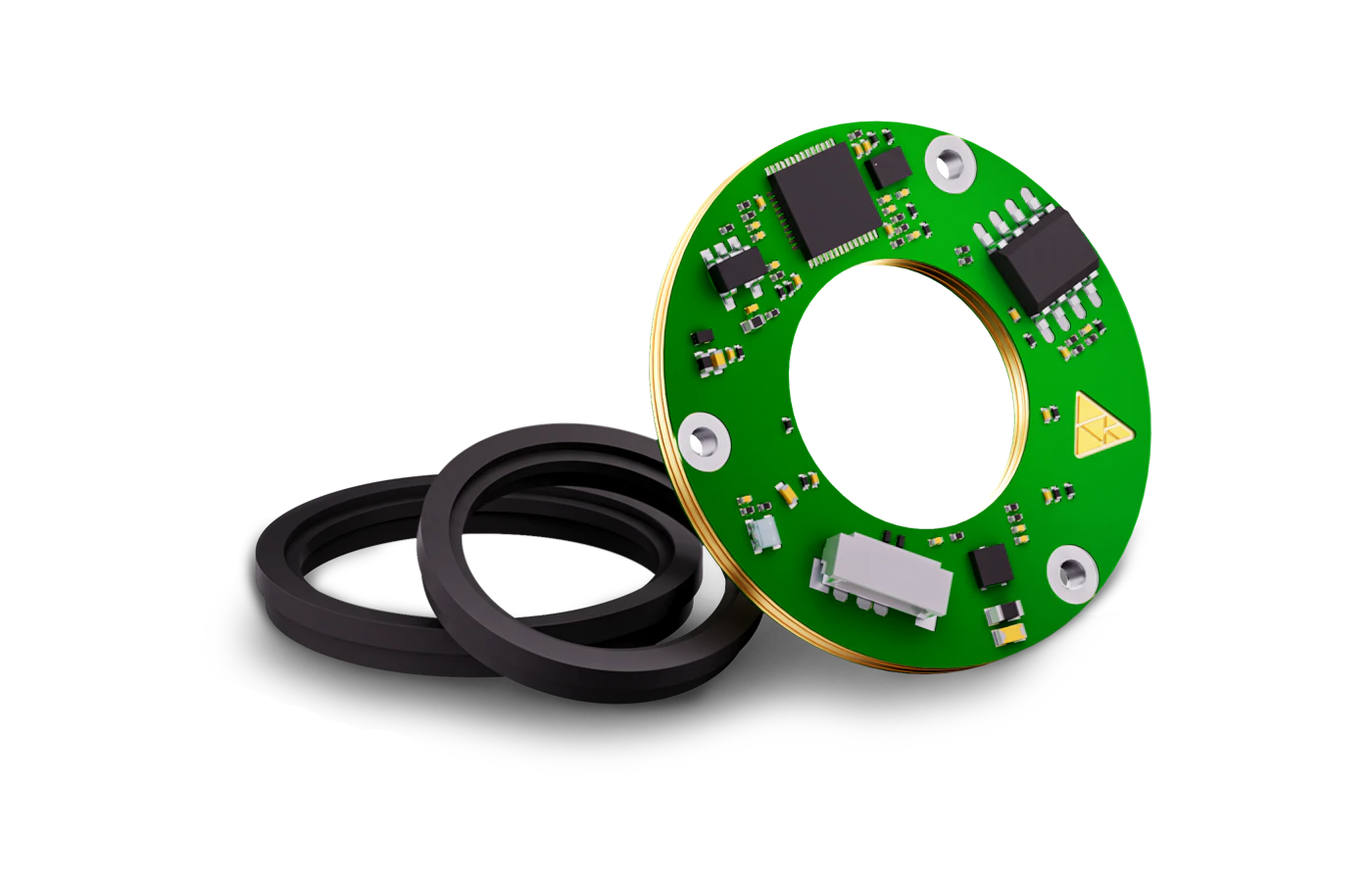
Encoders serve as the proprioceptive “nervous system” of embodied robots
Many people assume that robots rely primarily on “eyes”—that is, vision sensors—to perceive the world. In reality, vision alone is far from sufficient. What enables a robot to know “how much my knee is bent” or “the exact position of my wrist” is a core component embedded within each joint, forming a closed-loop control system—the encoder.An encoder performs a single, critical function: sensing the rotational state of the joint itself. Much like how humans can touch their nose even with their eyes closed, encoders provide robots with an essential sense of self-perception.
KingKong Technology Targets 2 Million Units as Global Robotics Demand Accelerates
In an exclusive interview with CCTV, Liang Zheng, General Manager of KingKong Technology, shared the company’s rapid production ramp:“We started developing robotic encoders in 2017. Our annual output reached 40,000 units in 2024, surged to 300,000 units in 2025, and this year, we are targeting a planned capacity of 2 million units.”The leap from 40,000 to 300,000, and now to 2 million, is more than just numerical growth—it signals the industry’s transition toward large-scale production.Liang Zheng further noted:“Downstream customers are not only placing more orders, but lead times are becoming increasingly tight. At the same time, we are actively expanding into humanoid robotics companies across the United States, South Korea, and Europe.
Humanoid Robotics Surge Drives Encoders into a Core, Non-Substitutable Role
It is understood that humanoid robots typically adopt harmonic drive joints in the upper body and planetary gear joints in the lower body. Regardless of the architectural approach, however, encoders remain an essential component across all configurations.As the cost of joint modules declines at an annual rate of approximately 20%, the transition toward scalable mass production is accelerating, further reinforcing the industry’s closed-loop development cycle.According to data released by General Administration of Customs of China, China’s various types of robots have been exported to more than 140 countries and regions.Notably,Chinese manufacturers account for over 80% of global humanoid robot shipments.
From 2017 to 2026, scaling from an annual output of 10,000 units to a planned capacity of 2 million,the company has spent nearly a decade preparing for what is widely seen as the first year of large-scale humanoid robot production.Being featured on CCTV is not the finish line, but rather the starting signal of a new phase.Today, as the era of mass production for humanoid robots begins to take shape, the target of 2 million units in annual capacity is not a slogan—it is a concrete response to the demands of this emerging industry.KingKong Technology will continue to provide compact, high-precision encoder solutions for robotic joints, while introducing next-generation products to further enable the rapid advancement of the robotics sector.