
2026-08-24
KingKong Technology's Crab Robot Steals the Show at WRC 2026, Featured by CCTV and Tech Creator He Tongxue
The 2026 World Robot Conference (WRC) ran from August 19 to 23 in Beijing's Yizhuang district. Across 50,000 square meters of exhibition space, more than 300 companies showed their work and robots of every kind took turns demonstrating what they can do. This time we brought a bright red crab to the KingKong Technology booth in the smart manufacturing hall and to JD.com's "Future Living" zone, and it quickly became the most eye-catching act on the floor.
That crab is our robot Tiaotiao. Moving to an upbeat rhythm, its six legs hit every beat with precision, and the fluidity of its motion makes it hard to associate with what most people picture when they hear the word machine. Some visitors raised their phones to film it, others swayed along with the music, and many simply laughed and called it adorable. Tiaotiao brought a lighter, friendlier note to a hall full of hardcore engineering.
The CCTV Moment: "A Cooked Crab That Still Moves"

When a CCTV News reporter arrived at the booth of JD.com, the conference's global strategic partner, to broadcast a walkthrough of the show, Tiaotiao happened to walk up carrying a small gift. The reporter laughed and said: "This is the first red crab I have ever seen. A cooked crab that still moves." The good-humored remark became the highlight of the broadcast. In close-up, Tiaotiao saluted the camera, danced nimbly, and handed over the gift in one smooth sequence that had everyone on set smiling.
He Tongxue, a technology creator with tens of millions of followers, also appeared in JD.com's livestream and tried Tiaotiao's motion performance himself, exclaiming at how agile it was. On set, our CEO Liang Zheng demonstrated Tiaotiao picking up a building block with its claw and placing it precisely on a target spot in one crisp, unhesitating motion. He Tongxue then joined Tiaotiao for a hip-swinging dance, and viewers watching from the other side of the screen echoed the same reaction: adorable.
What people were most curious about was what this crab will actually be able to do. Liang Zheng gave our answer during the livestream: "In the future it will hop on and off furniture at home the way a cat does. We want to bring the appeal of robotics into everyone's home and let people feel its athletic ability firsthand. We are also opening up our AI training platform so children can learn hands-on how to operate a robot with AI. As AI advances, Tiaotiao will help with small chores, hopping onto the bed to fold the quilt or onto the sofa to fold clothes, becoming a genuine little household helper. Technology should be both fun and useful."
Twenty-Two Tactile Servos Bring the Crab to Life
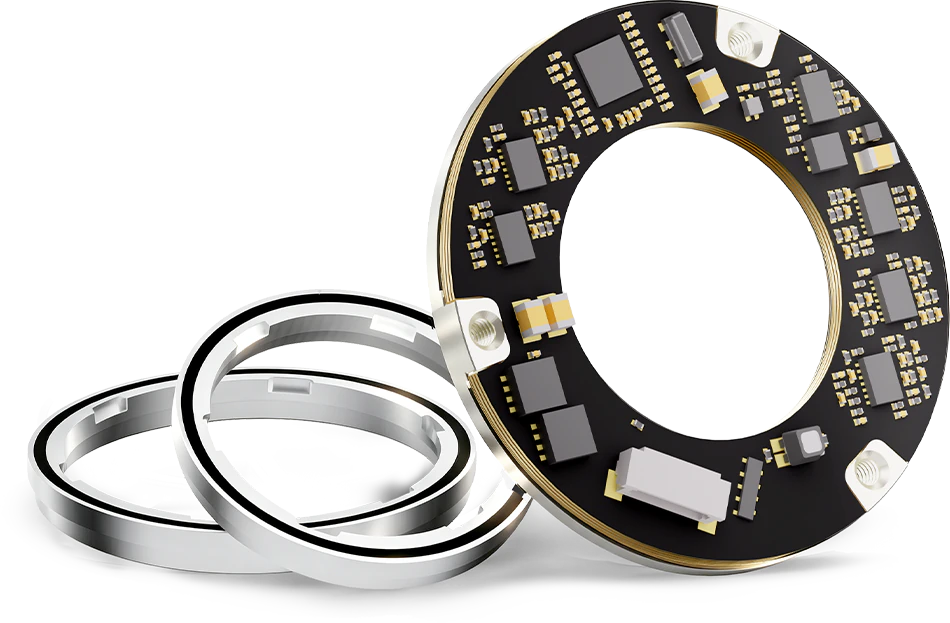
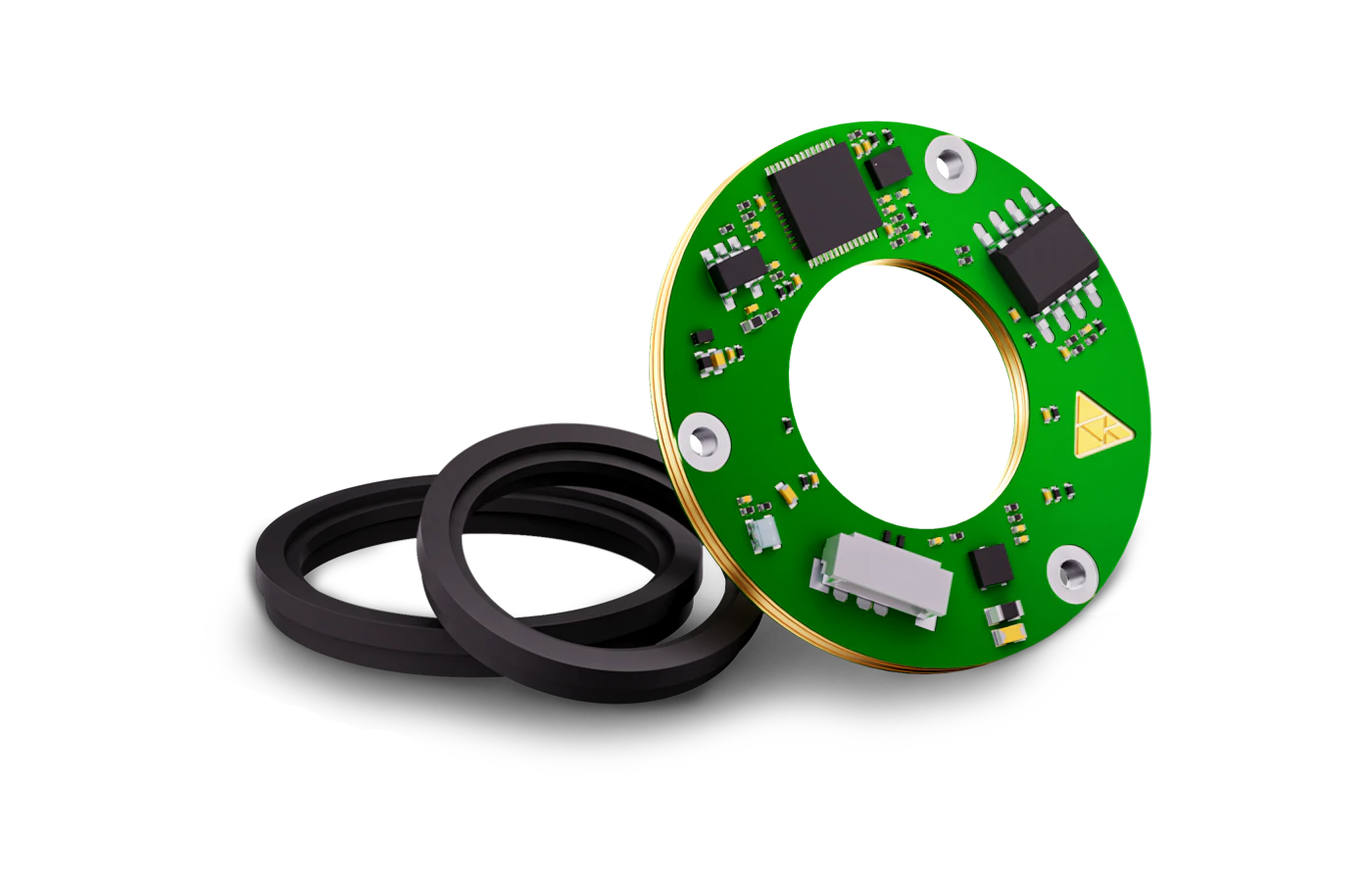
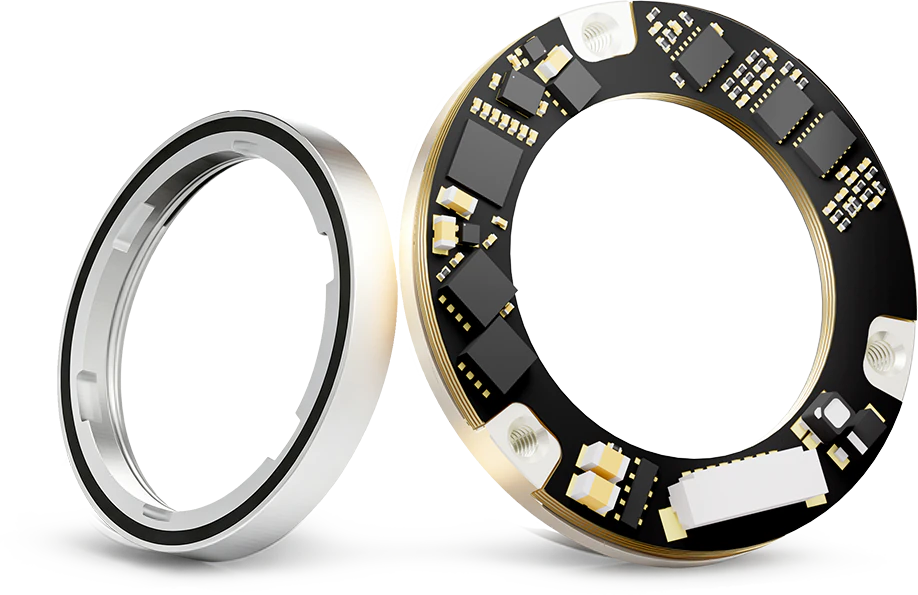
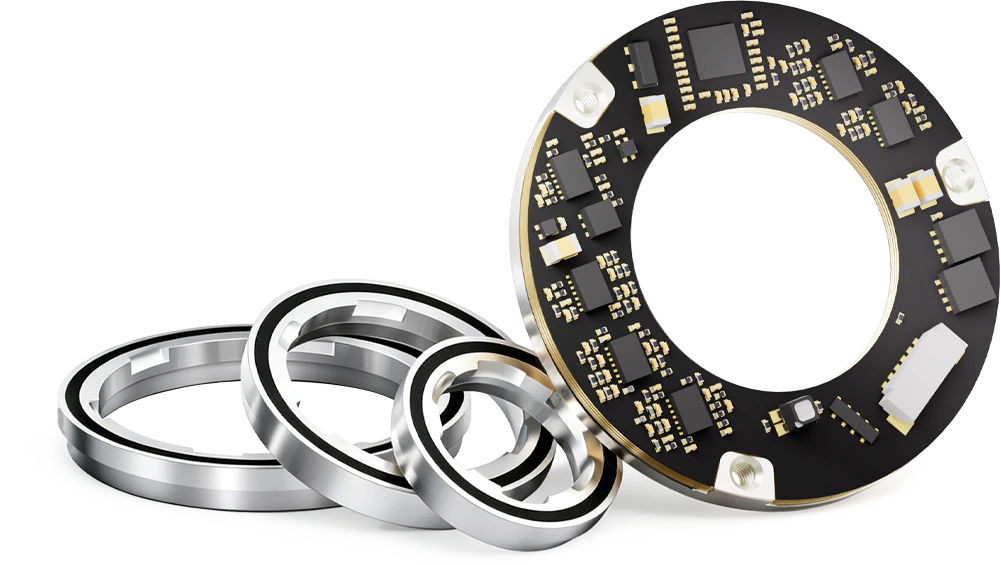
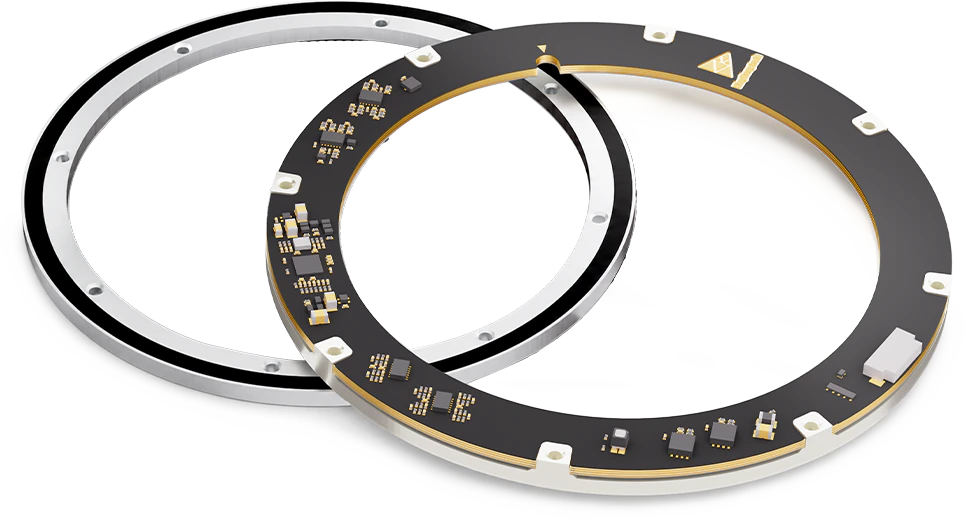
Behind Tiaotiao's charm is a precision motion system we built ourselves. Its body carries 22 compact tactile servos developed in-house by KingKong Technology. We solved a long-standing industry challenge by shrinking the servo to the size of a thumb while integrating two of the world's first patterned magnetic encoders inside it: one senses the position of the motor output, the other senses the position of the joint. Together they form a dual-encoder, fully closed-loop control architecture.
This design turns the servo from a muscle that merely executes commands into a muscle with its own nervous reflex. Conventional designs rely on a single encoder and can only report how many turns the motor has made, without accurately sensing what angle the joint actually reached. The dual-encoder architecture delivers position and force sensing across the whole chain, so every servo can feel in real time whether a joint has met resistance, stepped onto uneven ground, or gripped an object.
Twenty-two servos and forty-four encoders together make up Tiaotiao's motion nervous system. They are what turn mechanical swinging into something genuinely alive. Our goal is to pack high performance into a small body, keep pushing into complex motions such as jumping, adapt Tiaotiao to real home environments, and move little robots from simply moving to actually getting work done.
How Tiaotiao Came to Be: Building Upward From the Foundations
Tiaotiao was not born of a sudden flash of inspiration. It is the result of a climb that started at the very bottom of the technology stack and lasted almost ten years.
KingKong Technology was founded in 2017 and has gone deep into the narrow field of magnetic encoders. Today, our robot encoder products hold more than 80% of the domestic market, which means most robot joints in China rely on a KingKong encoder to sense position.
Building on that foundation, KingKong pushed upward into tactile servos that fuse sensing and actuation, packing both into an extremely small space. From encoders to servos and then to complete products such as Tiaotiao, we have followed a path of core component to core module to end product, with every step resting on years of accumulated mastery of the underlying technology.
With Tiaotiao as the starting point, we have mapped out a clear consumer product matrix. After the hexapod form we will introduce quadrupeds such as cats and dogs, along with compact bipedal humanoids. Different forms will serve a wider range of scenarios, from home care and companionship to tinkering and modification by enthusiasts, and on to children's programming education and teaching and research in academic settings. A small body paired with strong performance also gives little robots real potential in business scenarios such as pipeline inspection.
Hardcore technology defines what a product can do; emotional value carries the warmth of a brand. As the red crab in CCTV's close-ups and He Tongxue's hands-on experience brought this cooked crab to a much wider audience, Tiaotiao proved a point: the warmth of technology can begin with a dance that makes people smile, and from there step gradually into everyday life.